
What is the difference between a differential housing and a differential carrier?
As major components of transmission systems, differentials play a pivotal role in automotive and mechanical engineering. A differential not only adjusts the speed of wheels for turning but also maintains the delivery of power without any jerk. The differential housing and differential carrier are two main parts of the differential assembly. Even though both of them contribute greatly to the differential structure, there is a big difference between them in terms of function and design. In this post, we are going to discuss differentials between differential carrier and differential housing.
1.Overview of Differential Housing
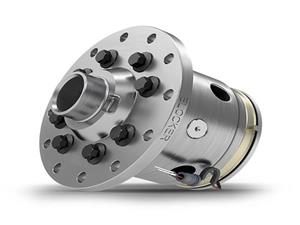
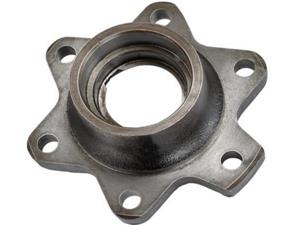
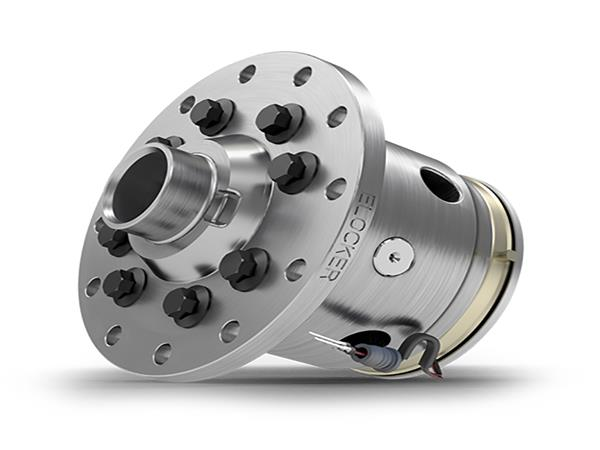
The differential housing is a very important part of the differential assembly, whose main function is to hold and protect the differential gears and bearings while ensuring smooth operation at the same time. It is usually made of high-strength cast iron able to work stably even under conditions of very high intensity.
The differential housing in the transmission system of the engines is a part whose production involves great accuracy in its different features especially as it runs the functions that are critical in various types of vehicles including mainly but not limited to cars, heavy-duty vehicles and farm tractors. Its design engineering must not only be capable of meeting the structural strength requirements of the transmission systems but also give priority to human factors such as ease of installation and maintenance of the parts.
Dandong Fuding Engineering Machinery Co., Ltd. produces differential housings by using high-strength cast iron and the latest anti-corrosion treatment that preserves the products’ performance and appearance for a very long time. The use of wear-resistant materials has helped the company minimize the maintenance downtime and at the same time operate the equipment efficiently. Each differential housing casting is subjected to thorough quality checks so as to guarantee performance and reliability.
2. Overview of Differential Carrier
The differential carrier unlike the differential housing mainly supports the gears within the differential. It is not only responsible for delivering power from the engine to the internal gears but also for holding them and the bearings in position securely. Generally, a differential carrier is made of cast steel or aluminum alloy which gives it excellent impact resistance and ability to withstand high temperatures.
Also, great precision is required for the differential carrier in the first place, it should be so well fitted with the differential gears that there is no oscillation, no looseness and no vibration even at high speeds and that just guarantees accurate transmission of power. Besides, a good differential carrier will ensure that power transmission of the differential is done efficiently and will lead to vehicle stability in a lasting manner.
3. Differences Between Differential Housing and Differential Carrier
Although both the differential housing and carrier support and transmit force in a differential, their structures and functions are very different. To be more specific, the differences between the differential housing and carrier are primarily based on the below points:
Differences in functional roles
Differential housing is mainly used for housing and protecting the differential gears and bearings providing external protection for differential. Besides, it is required to havestanding capability to the impacts of great intensity and also temperature changes within the transmission system. Therefore, the materials used in it are usually very strong and have high compressive resistance.
On the other hand, the differential carrier mainly acts as the differential gears supporting and power transmission to the inside of the differential parts. It should be very tough so as to be impact resistant and highly stable so as to be able to keep the transmission system running efficiently without any problems.
Differences in materials
Typically, differential housings are made from differential housing material, since cast iron offers excellent compressive strength and wear resistance, which makes it capable of withstanding high operational loads. The material must be thoroughly checked for quality in order to ensure consistent performance under high-strength working conditions.
Differential housings are generally made from materials that have a very good impact resistance and are light in weight, as this will allow them to better sustain the demands of high-speed transmission. The major focus in the design and material selection of differential housings is to make the friction as low as possible and to save energy in order to improve transmission efficiency.
Differences in Design and Structure
A differential housing is generally made with a plain structural design, it is mostly referred to as the element that holds and shields the inner gears and bearings of the differential. Apart from that, it also needs to be very strong and stiff to be able to support the internal transmission components which are always heavy and to resist in operation impact forces during use without any failure.
The differential carrier design is much more sophisticated than that of differential housings. It is no wonder that the development starts with transmission gear system requirements. Structures should be capable of accurate and consistent meshing of gears and bearings, besides, they must also be durable enough to withstand the vibrations and shocks of high-speed operation.
Differences in Installation and Maintenance
A simple differential housing structure will generally be a big help in making installation and maintenance operations easy enough. Important maintenance and repair works are mainly external corrosion prevention and cracks, damages, etc. detection. Owing to regular inspections and maintenance, the long-term stable working of differential housings can be definitely ensured.
On the other hand, differential carriers installation and maintenance are quite complicated considering that they involve precise gear meshing and high transmission efficiency, hence require special technical support and maintenance. Proper functioning of differential carriers can be ensured only by regular inspections and component replacement on time.
4. Practical Application of Differential Housing and Carrier
Practically speaking, differential housing and carrier are one and inseparable thing which has a joint function to ensure the differential in vehicles and machinery is working smoothly. Differential housing is the outer protective and supporting part of the differential, and differential carrier is the element responsible for the correct transmission of gears.
Dandong Fuding Engineering Machinery Co., Ltd. is a differential housings and carriers manufacturer whose products can be found in industrial and agricultural machinery worldwide. Our differential housings are made from very durable cast iron with high strength and excellent resistance to corrosion. In this way, the life of the product can be prolonged while at the same time maintenance needs can be lessened. Besides that, our highly accurate differential carriers, which have excellent compatibility feature, can be used not only for the vehicle models that are currently in existence but also for a range of other models, ensuring customer satisfaction and product reliability .
Differential housing and carrier perform different roles in a differential system. They share some functions but their design, materials, structural requirements, etc., are different. Differential housing being the external one provides mainly protection and support while carrier being the internal one handles precise transmission. Considering the above differences, the selection and maintenance of the differential system can be optimized, which, in turn, will enhance transmission efficiency and vehicle stability.
By product design and material selection, Dandong Fuding Engineering Machinery Co., Ltd. has been delivering high-quality differential parts that meet even diversified customers' demands and, at the same time, assure longevity and reliability.