
Applications of Automotive Transmission Differential Carriers in Commercial Vehicle and Passenger Vehicle Drivetrain Systems
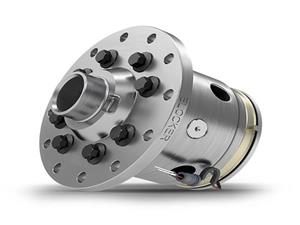
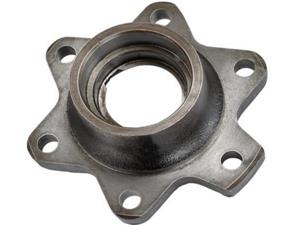
Automotive Transmission Differential Carriers are important structural components in drivetrain systems. Their primary function is to provide installation space and structural support for the differential assembly while withstanding loads generated during gear meshing, ensuring stable power transmission to the drive wheels. With the rapid development of new energy vehicles, heavy-duty commercial vehicles, and high-performance passenger cars, the structural strength, dimensional accuracy, and material properties of Automotive Transmission Differential Carriers are receiving increasing attention from vehicle manufacturers and transmission suppliers.
Main Functions of Automotive Transmission Differential Carriers
When a differential operates, it must coordinate speed differences between the left and right wheels, enabling stable vehicle operation during cornering, acceleration, and complex road conditions. As a critical load-bearing component, Automotive Transmission Differential Carriersare responsible for:
• Securing and supporting differential gear assemblies;
• Maintaining gear meshing accuracy;
• Withstanding torque impacts and cyclic loads;
• Protecting internal drivetrain components from external contamination;
• Providing space for lubricant storage and circulation.
The dimensional stability of the carrier directly affects gear backlash and transmission efficiency. Therefore, strict machining and inspection controls are typically required during production. As the core support structure of the differential assembly, the carrier provides a stable installation foundation for gears, bearings, and related components.
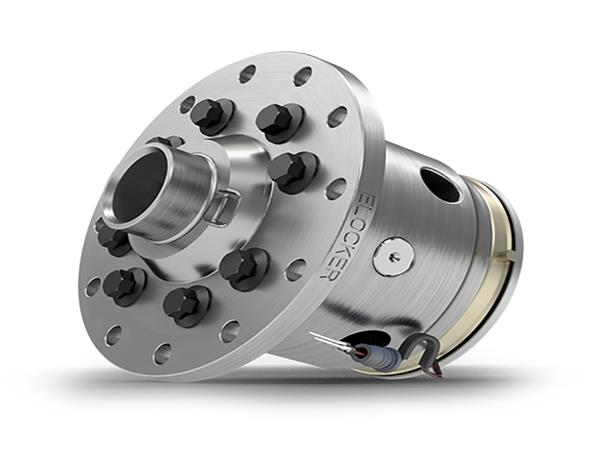
Applications of Automotive Transmission Differential Carriers in Commercial Vehicles
In heavy-duty trucks, construction transport vehicles, and logistics transportation vehicles, drive axles operate under high-load conditions for extended periods.
These vehicles generally require:
• Continuous long-term operation;
• The ability to withstand heavy loads;
• Adaptation to complex road environments;
• High drivetrain reliability.
Therefore, Automotive Transmission Differential Carriers used in commercial vehicles are commonly manufactured from high-strength ductile iron or high-performance cast steel. Optimized rib structures are used to improve overall rigidity and reduce the impact of housing deformation on gear meshing accuracy.
For heavy-duty drive axles, the fatigue resistance of the differential carrier is often one of the key indicators used to evaluate overall vehicle durability.
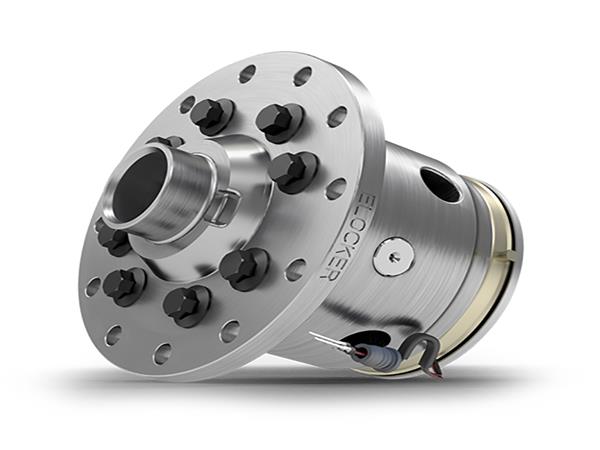
Applications of Automotive Transmission Differential Carriers in Passenger Vehicles
In the passenger vehicle market, lightweight design has become a major direction in drivetrain system development.
More vehicle manufacturers are adopting:
• High-strength aluminum alloy housings;
• Thin-wall precision casting processes;
• CNC precision machining technologies;
• Finite element structural optimization designs.
By reducing the weight of Automotive Transmission Differential Carriers, vehicle manufacturers can decrease overall vehicle weight, improve fuel economy and driving range, while maintaining sufficient structural strength.
For new energy vehicles, the high instantaneous torque output of electric motors places even greater demands on the rigidity and machining precision of Automotive Transmission Differential Carriers.
Why Buyers Are Paying More Attention to Differential Carrier Suppliers
For transmission manufacturers and drive axle producers, purchasing decisions for Automotive Transmission Differential Carriers are no longer based solely on price.
Current procurement decisions focus more on the following factors:
1. Casting Capability
Whether the supplier has stable large-scale casting capacity and can ensure product consistency.
2. Machining Capability
Whether the supplier possesses high-precision CNC machining equipment to guarantee the accuracy of critical mounting surfaces and bearing bores.
3. Inspection Capability
Whether the supplier is equipped with coordinate measuring machines (CMM), metallographic analysis, and non-destructive testing capabilities.
4. Project Development Capability
Whether the supplier can rapidly develop and produce prototypes based on customer drawings or samples.
For OEM customers, a supplier’s engineering collaboration capability often determines project implementation efficiency.
Future Development Trends of Automotive Transmission Differential Carriers
Over the next several years, the development of Automotive Transmission Differential Carriers will mainly focus on:
• Lightweight structural design;
• Application of high-strength materials;
• Integrated casting processes;
• Smart manufacturing and online inspection;
• Dedicated drivetrain systems for new energy vehicles.
As the global automotive industry continues to pursue higher efficiency and lower energy consumption, Automotive Transmission Differential Carriers will continue to evolve toward higher precision, lighter weight, and longer service life.
For transmission manufacturers, drive axle producers, and automotive component buyers, selecting a differential carrier supplier with mature casting, machining, and quality control systems can help improve drivetrain reliability and market competitiveness.
Feel free to contact us at any time.
Email: zhang66n55@163.com
Phone: +86-415-7167088