
How to Choose a Reliable Casting Supplier? 7 Key Evaluation Criteria
In the automotive, agricultural machinery, mining equipment, and fluid conveyance industries, castings serve as core foundational components; consequently, their quality directly impacts the overall performance and service life of the finished machinery. For global buyers, selecting a reliable casting supplier is not merely a matter of product quality; it also directly influences lead times and overall procurement costs.
Drawing upon industry best practices, this article outlines seven key evaluation criteria designed to assist buyers in establishing a systematic framework for supplier selection.
1.Material and Metallurgical Control Capabilities
The foundation of high-quality castings lies in material stability. Taking gray cast iron (HT250) as an example: its tensile strength must meet or exceed 250 MPa, while the compositional deviation for elements such as carbon, silicon, and manganese must be maintained within a tolerance of ±0.02%. Manufacturers equipped with spectroscopic analysis instruments can perform 100% batch-level compositional testing, thereby ensuring absolute material consistency.
2.Production Scale and Delivery Capabilities
Production scale directly determines the stability of delivery performance. Based on industry experience:
* Casting enterprises with an annual output exceeding 5,000 tons possess a significantly greater capacity to handle incoming orders.
* The deployment of multiple production lines allows for the control of delivery lead-time fluctuations within a tight window of ±3 days.
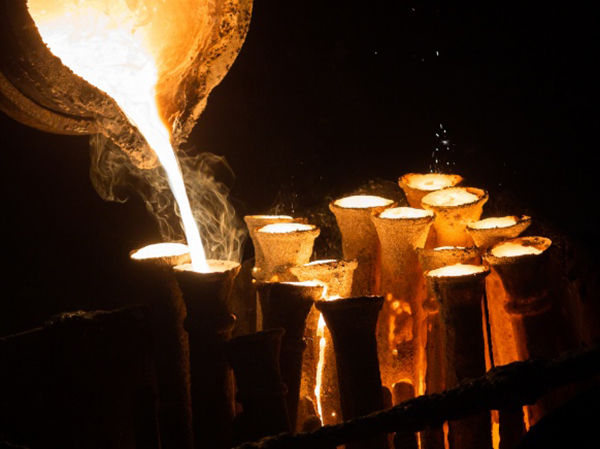
Since its inception in 1958—and following a comprehensive facility relocation and upgrade in 2010—Dandong Fuding Engineering Machinery Co., Ltd. now occupies a sprawling 38,000-square-meter site with a total building area of 20,000 square meters, establishing a robust foundation for large-scale, industrialized production.
3. Product Coverage and Breadth of Application
Reliable suppliers typically possess extensive experience serving multiple industries.
Examples include: automotive components (requiring high precision), agricultural machinery castings (requiring high wear resistance), and pump bodies and valves (requiring strict sealing integrity).
Currently, Dandong Fuding offers over 2,000 types of castings across six major product series, covering a wide range of industrial sectors and demonstrating robust cross-industry adaptability.
4.Equipment and Process Capabilities
Advanced equipment directly impacts product consistency: automated molding lines can boost efficiency by over 30%, while advanced flask systems help minimize defects such as porosity and slag inclusions. By continuously adopting internationally advanced casting flask systems and process technologies, the company is able to maintain a scrap rate of less than 2%.
5. Machining Capabilities
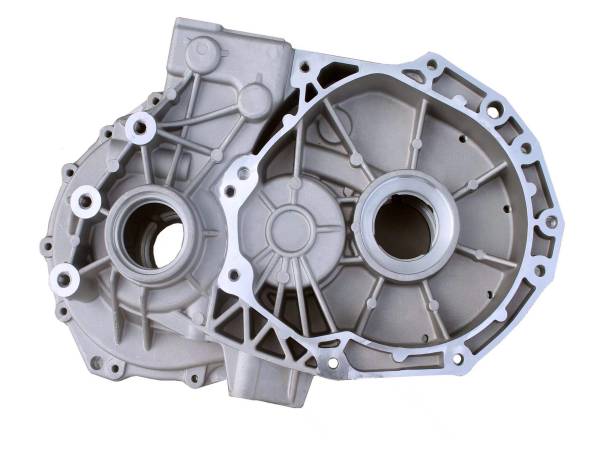
Modern procurement trends increasingly favor an integrated "casting-plus-machining" supply model.
Utilizing equipment such as CNC machining centers, boring machines, and milling machines, we are able to: enhance dimensional accuracy to within ±0.05 mm and reduce secondary outsourcing costs by 10%–25%.
Dandong Fuding has established dedicated machining production lines capable of providing customized machining services tailored to the specific processing requirements of various products.
Quality Inspection System
Inspection capability lies at the core of quality assurance. Our standard capabilities include: physical property testing (hardness, tensile strength)
chemical composition analysis, and non-destructive testing (UT/MT). Our comprehensive inspection center enables 100% inspection of critical products, thereby significantly mitigating quality risks associated with mass production batches.
Dandong Fuding maintains an independent physical and chemical testing center, equipped with advanced inspection instruments to ensure rapid and precise quality control.
6. International Market Validation
A supplier's presence in the international market serves as a crucial benchmark for assessing their reliability.
Companies capable of exporting to nations such as Germany, Japan, and the United States have typically met—and often exceeded—more rigorous standards, including:
stricter dimensional tolerances and higher requirements for quality consistency.
Dandong Fuding’s products have been successfully exported to numerous countries—including Germany, Japan, the United States, the United Kingdom, South Korea, Norway, and Brazil—where we have established long-term, stable cooperative relationships.
Against the backdrop of increasingly complex global supply chains, the procurement of castings has shifted from a "price-oriented" approach to one based on a "comprehensive capability assessment."
A truly reliable supplier should possess the following attributes simultaneously:
Stable material control capabilities
A complete production and machining system
Rigorous quality inspection processes
Experience validated by the international market
By systematically evaluating these seven key indicators, buyers can effectively mitigate risks and forge long-term, stable supply partnerships.
If you require technical advice or solution support regarding specific products (such as harvester gearboxes or housing castings), or wish to discuss your specific application requirements in further detail, we invite you to contact us.